I’ve stared putting up dive photos and information on my robotics blog, roko.ca, but somehow it just didn’t see to fit in with quadrupeds and sumo robots. As such, I’ve decided to start up this diving specific blog, where I’ll share photos from my dive experiences, mainly for terrestrial-bound friends and family, to show the wonders of the Emerald Sea, and other dive trips I go on!
I’ll slowly start uploading old photos, and will update whenever I go diving, so stay tuned and subscribe to my RSS Feed!
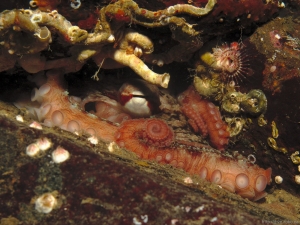
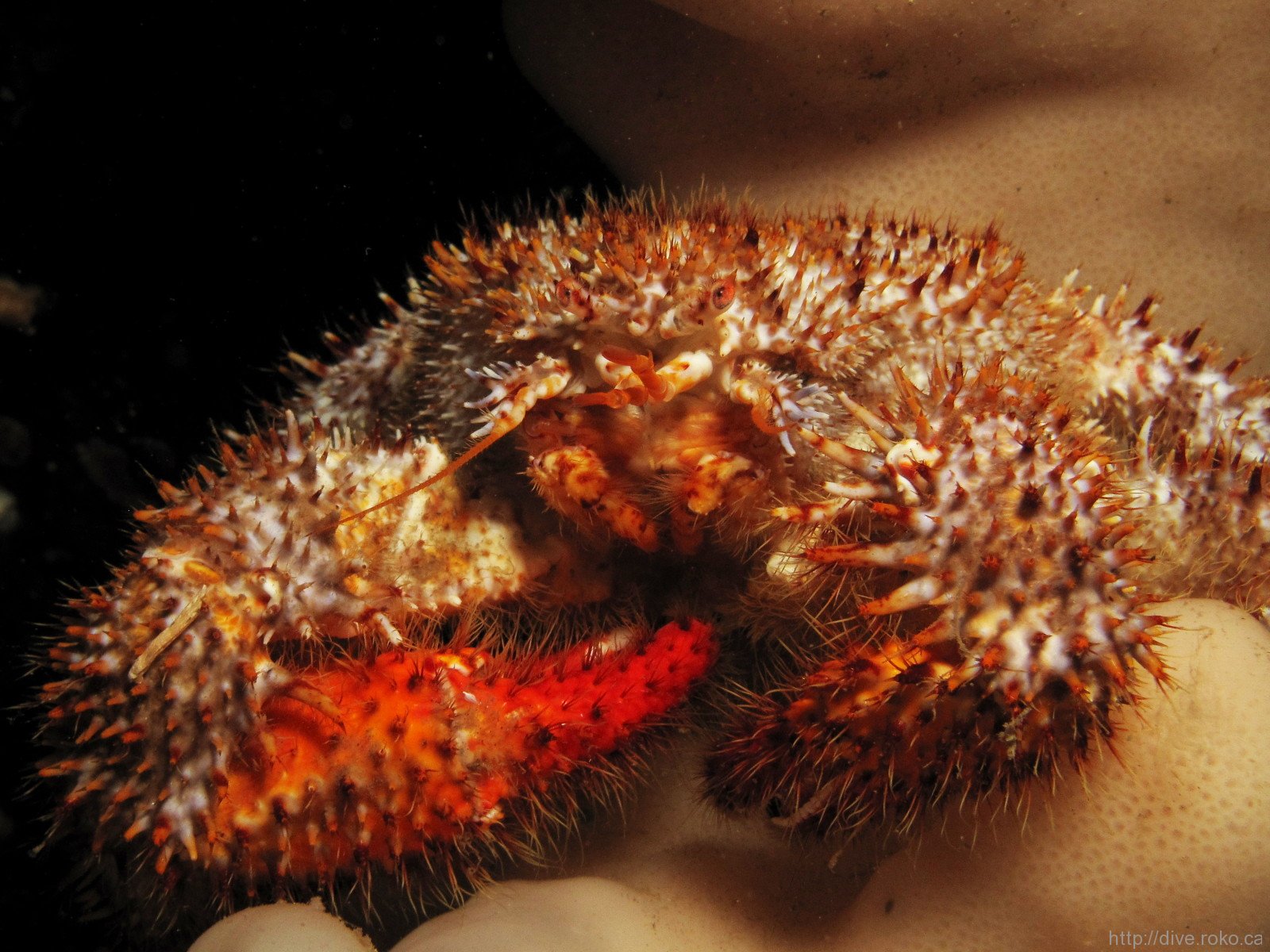
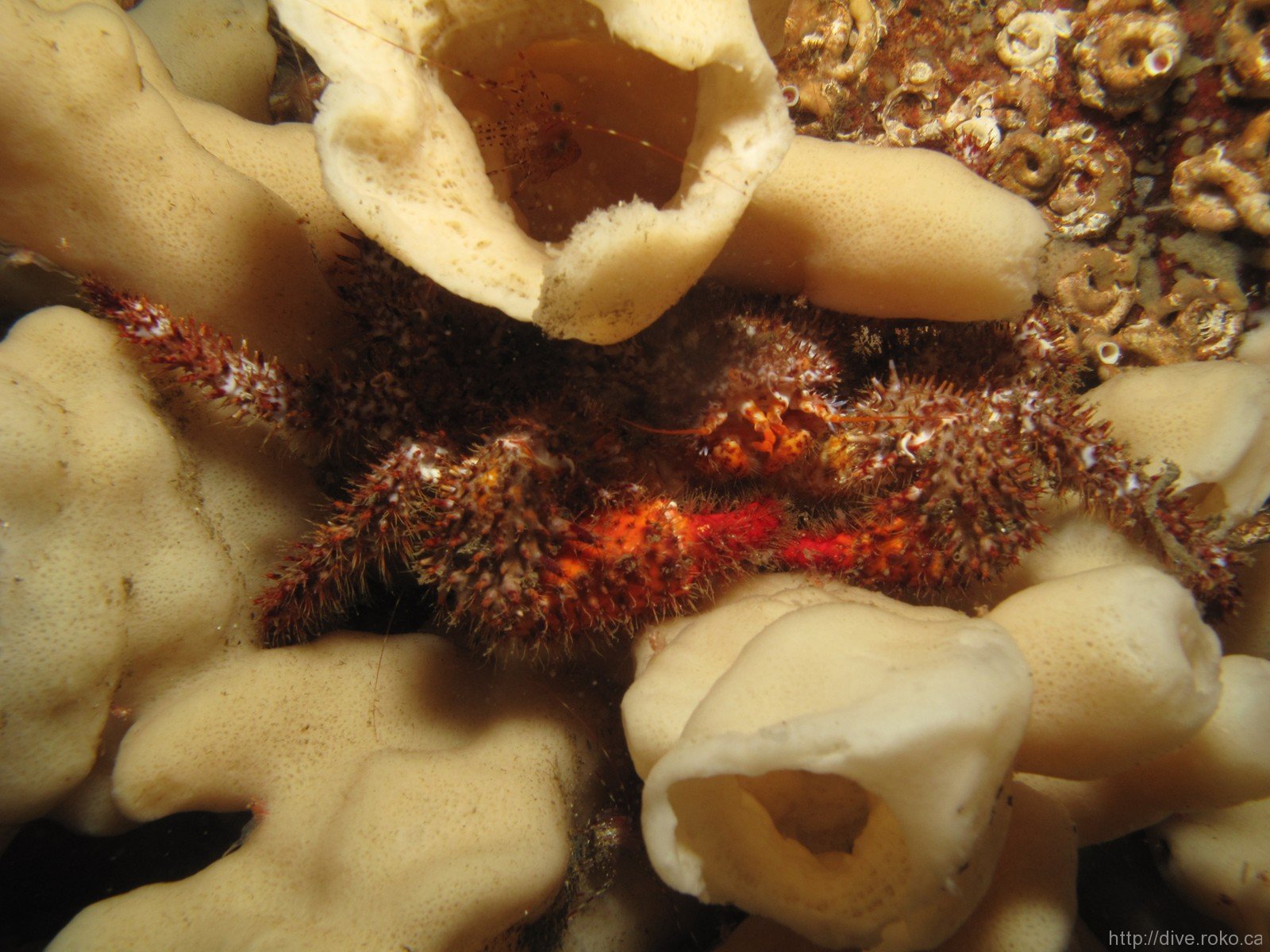
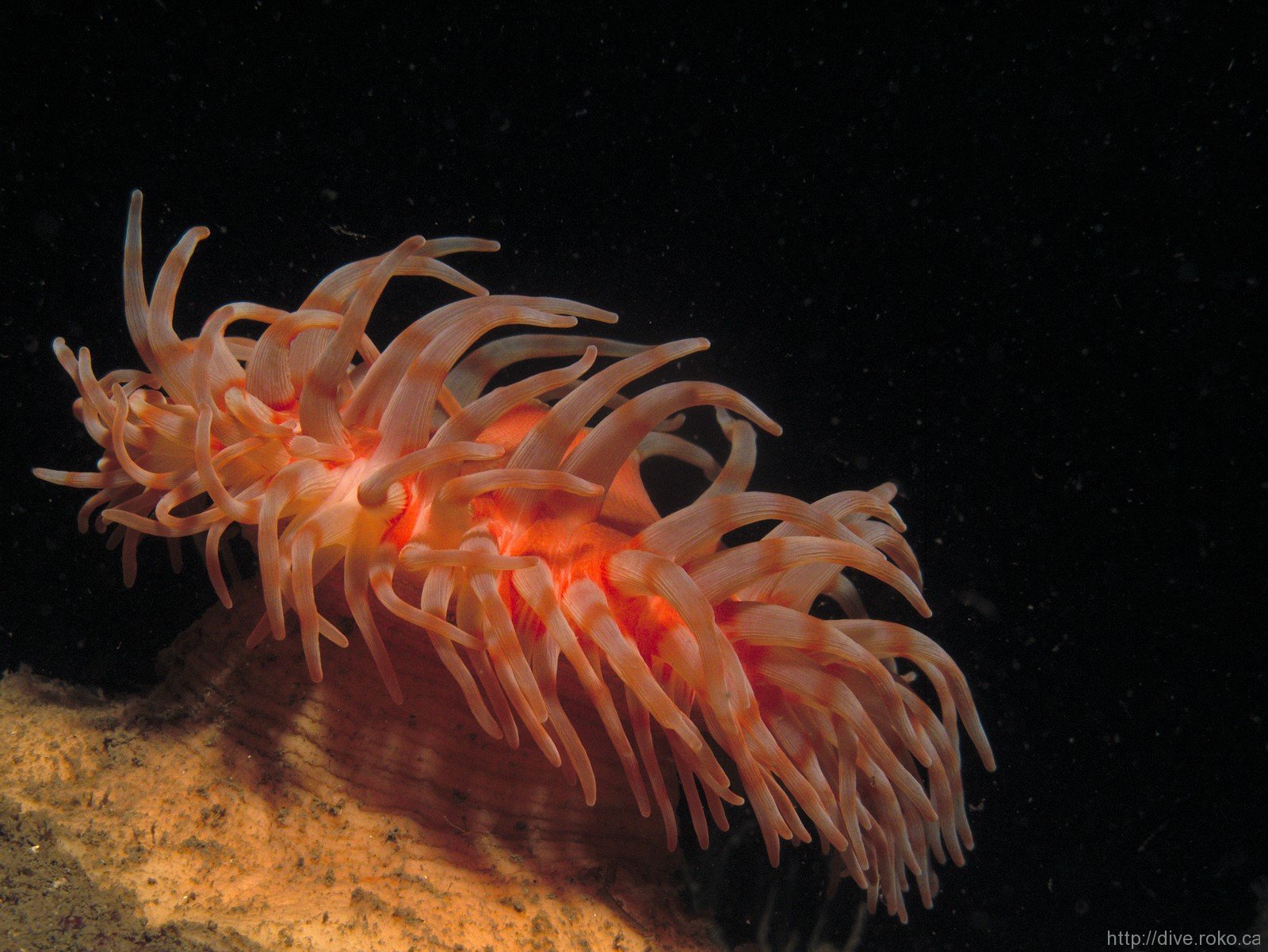
A Longhorn Decorator Crab, posing nicely on a retracted plumose anemone.
Perhaps “Pea Soup” is a bit of an extreme description of the visibility at Porteau today, as I’ve seen worse in some deep mountain lakes, but after a long surface swim Josh and I dropped down on the Granthal to enjoy a nice dive with only 5-10 feet of visibility with plenty of particulates in the water. (This cleared up to a solid 10 feet of visibility below 50 feet or so.) It looks like the spring algae bloom has arrived.
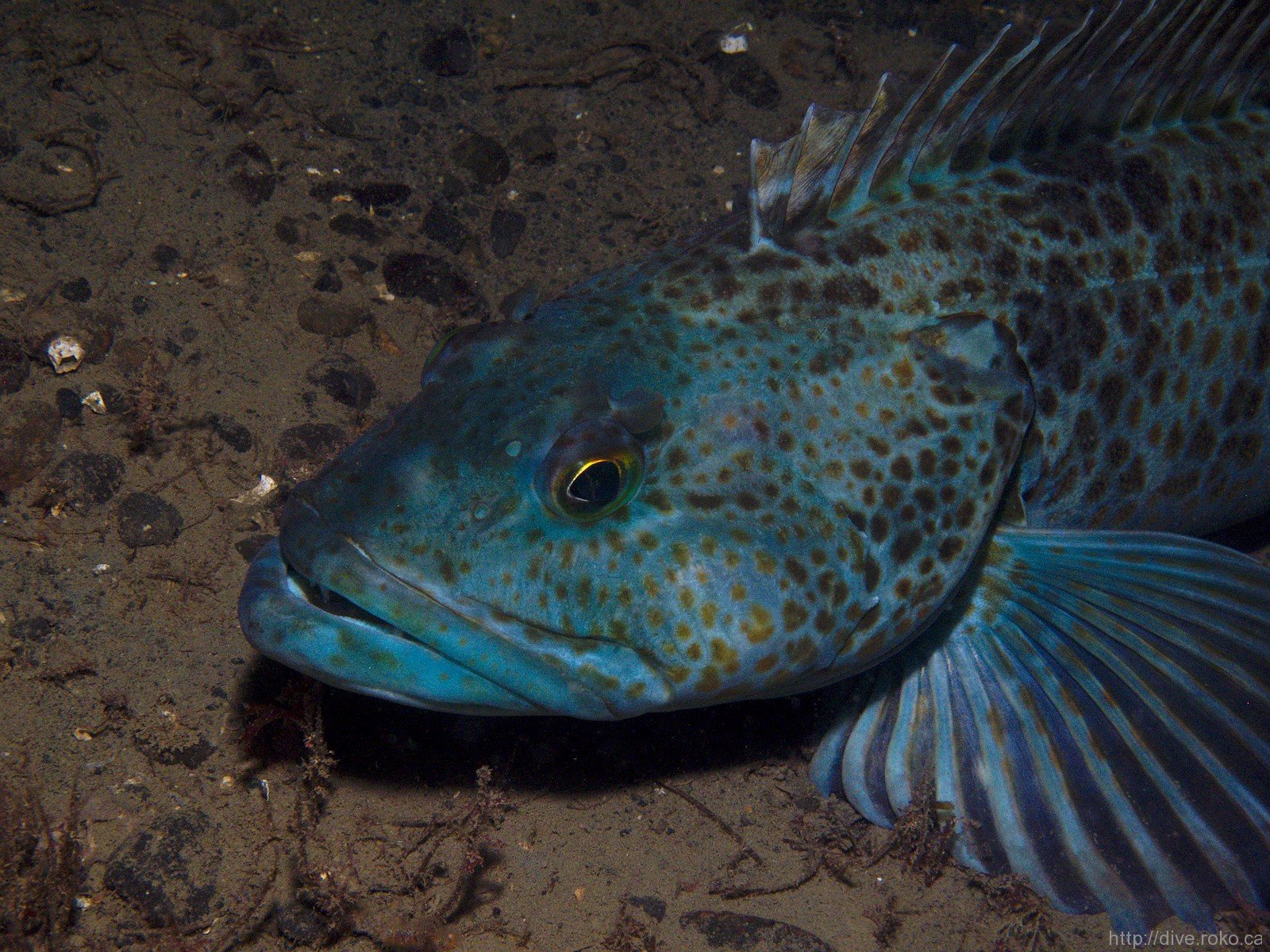
Regardless of the visibility, we had a couple of great dives, with plenty of things to see. Some of the highlights included a huge number of decorator crabs, both Longhorn and Graceful. Plenty of nudibranch and other critters made appearances, including many Lingcod (some guarding egg masses). It never ceases to amaze me just how much life you can spot in the “muck” if you slow down and look carefully. Even on days with poor visibility, there is a lot to see.
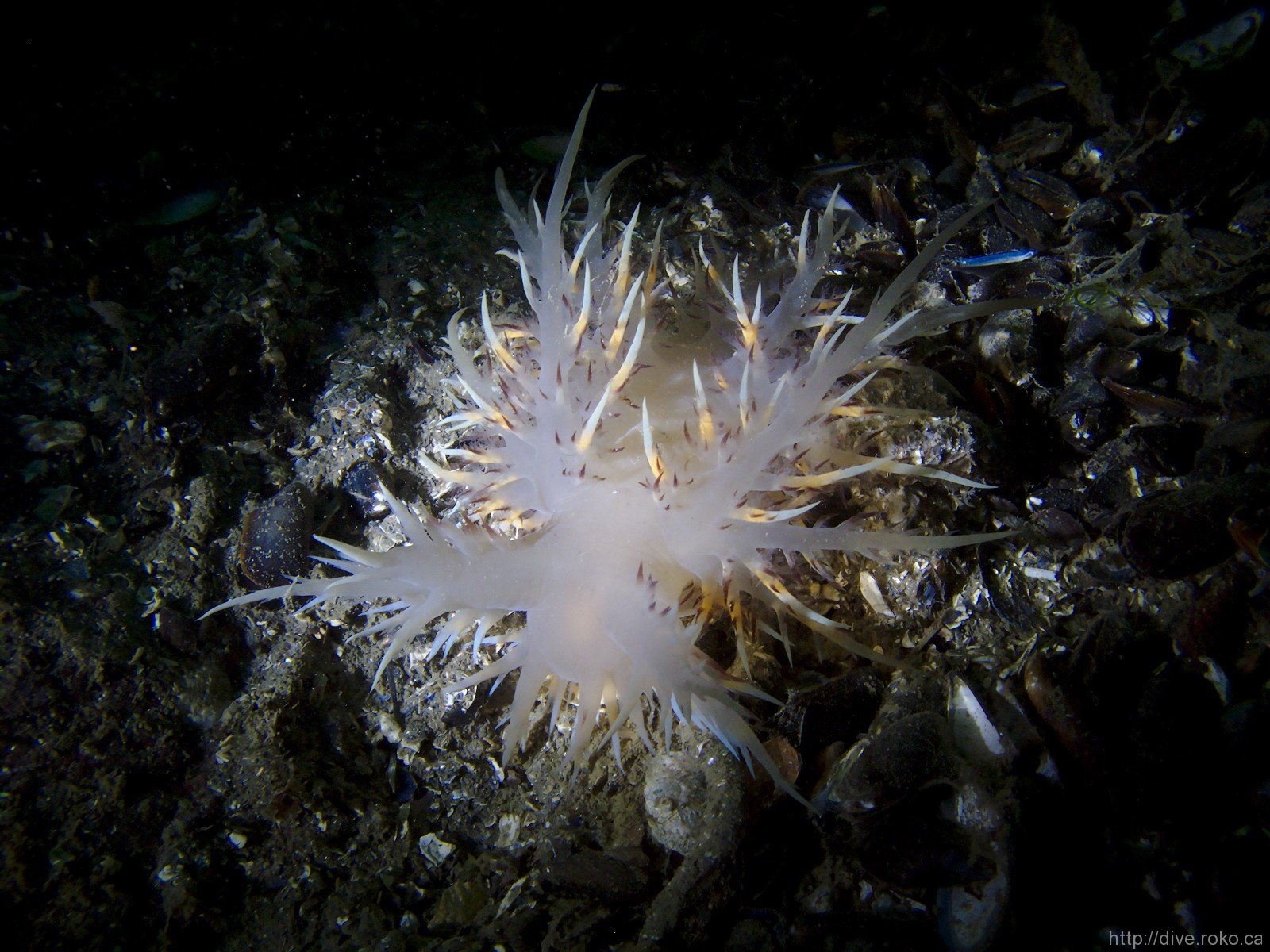
An Opalescent Nudibranch. There were several of these out and about, including some very tiny ones.
Due to the large amount of particulates in the water, I struggled with backscatter on any of the larger subjects (such as the Lingcod) or subjects where I tried to get black background. (In retrospect I should have adjusted the aperture to blur the background and try to hide the backscatter). I think the photos turned out pretty well. Try to spot the individual limbs on the very well camouflaged Graceful Decorators!
It’s been a great month for diving so far, hopefully I can squeeze in yet another couple of dive days before the month’s end….
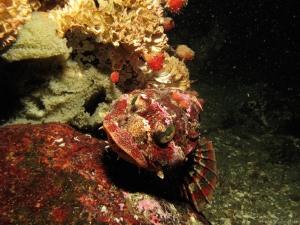
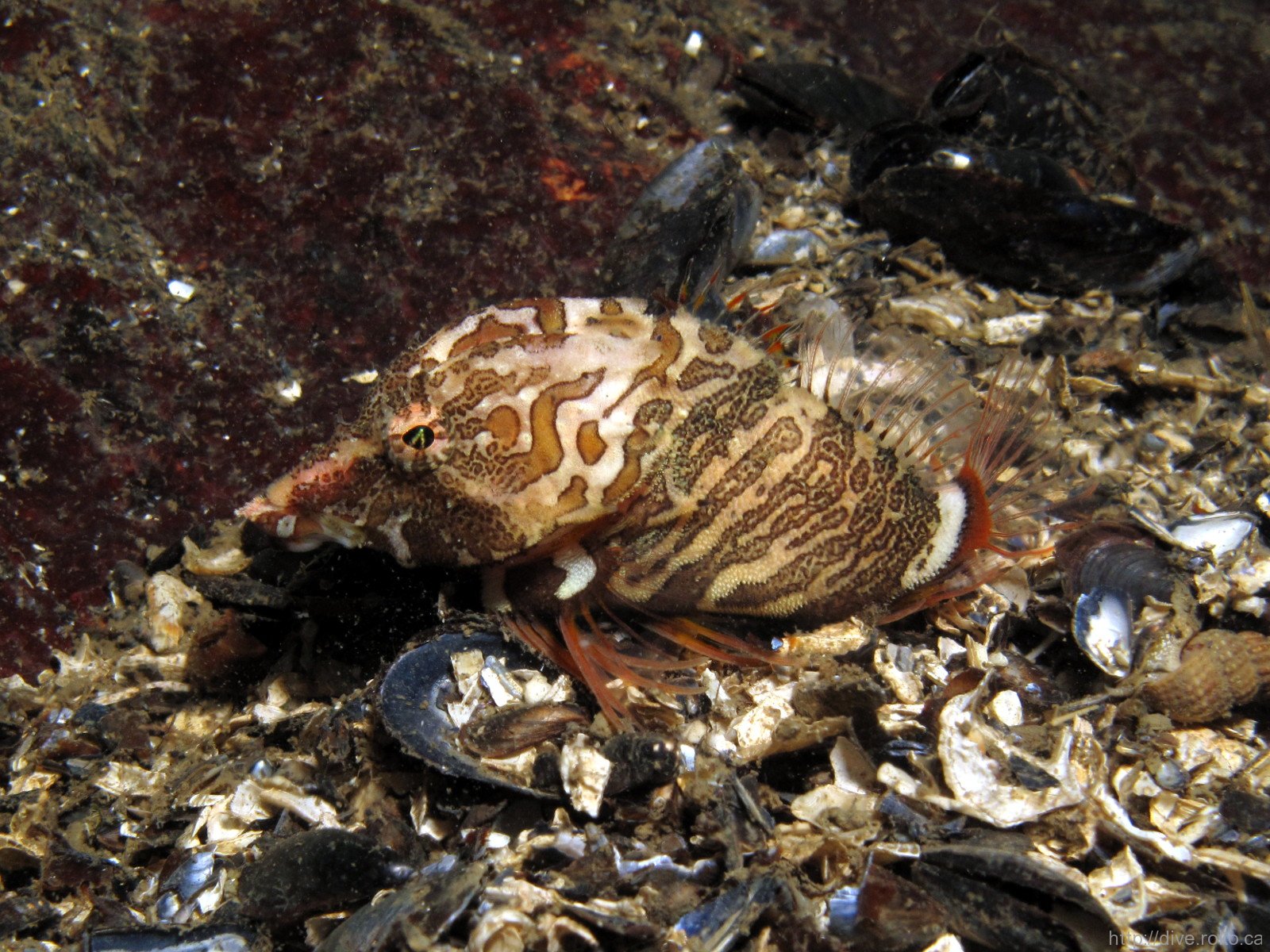
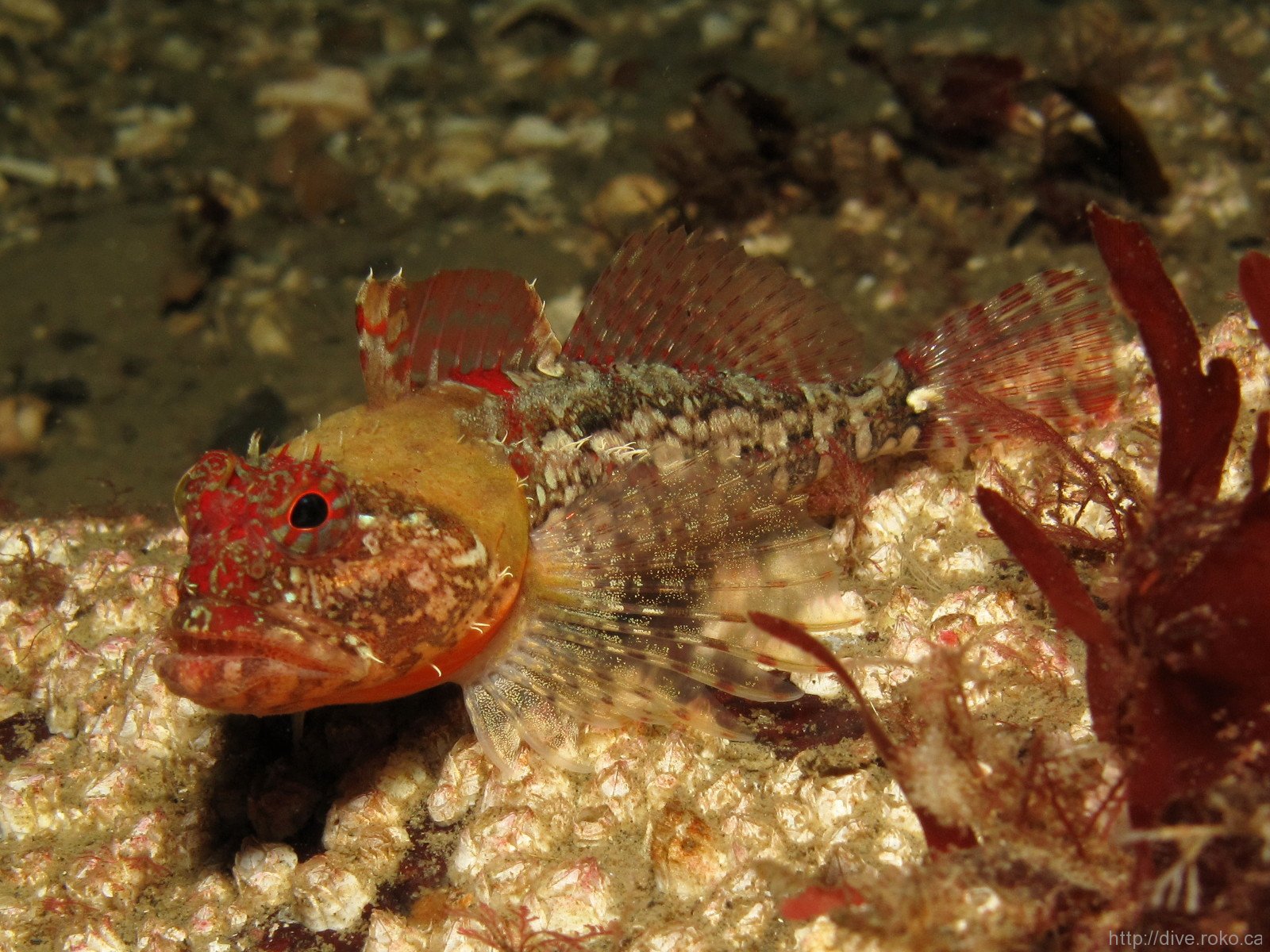
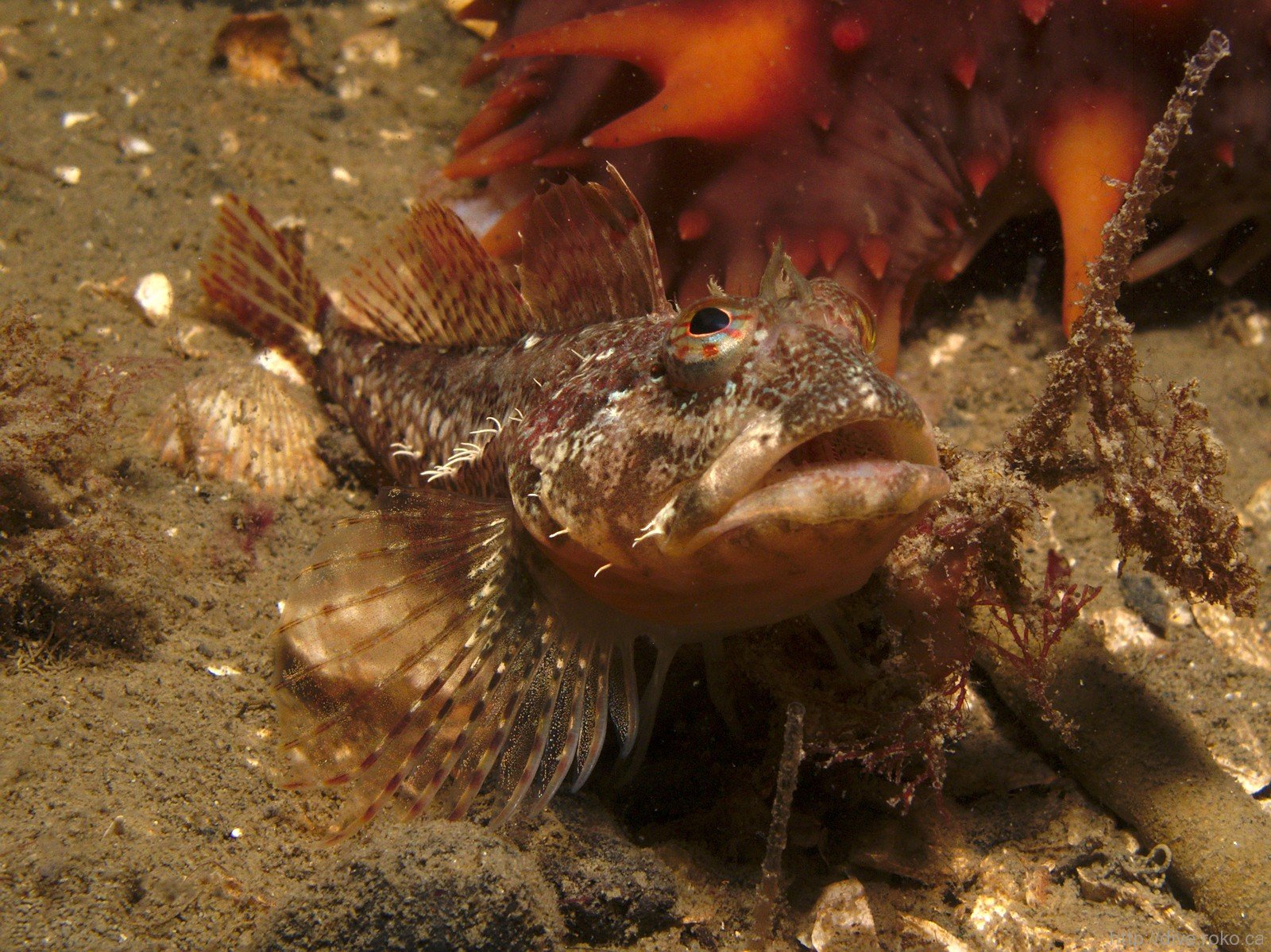
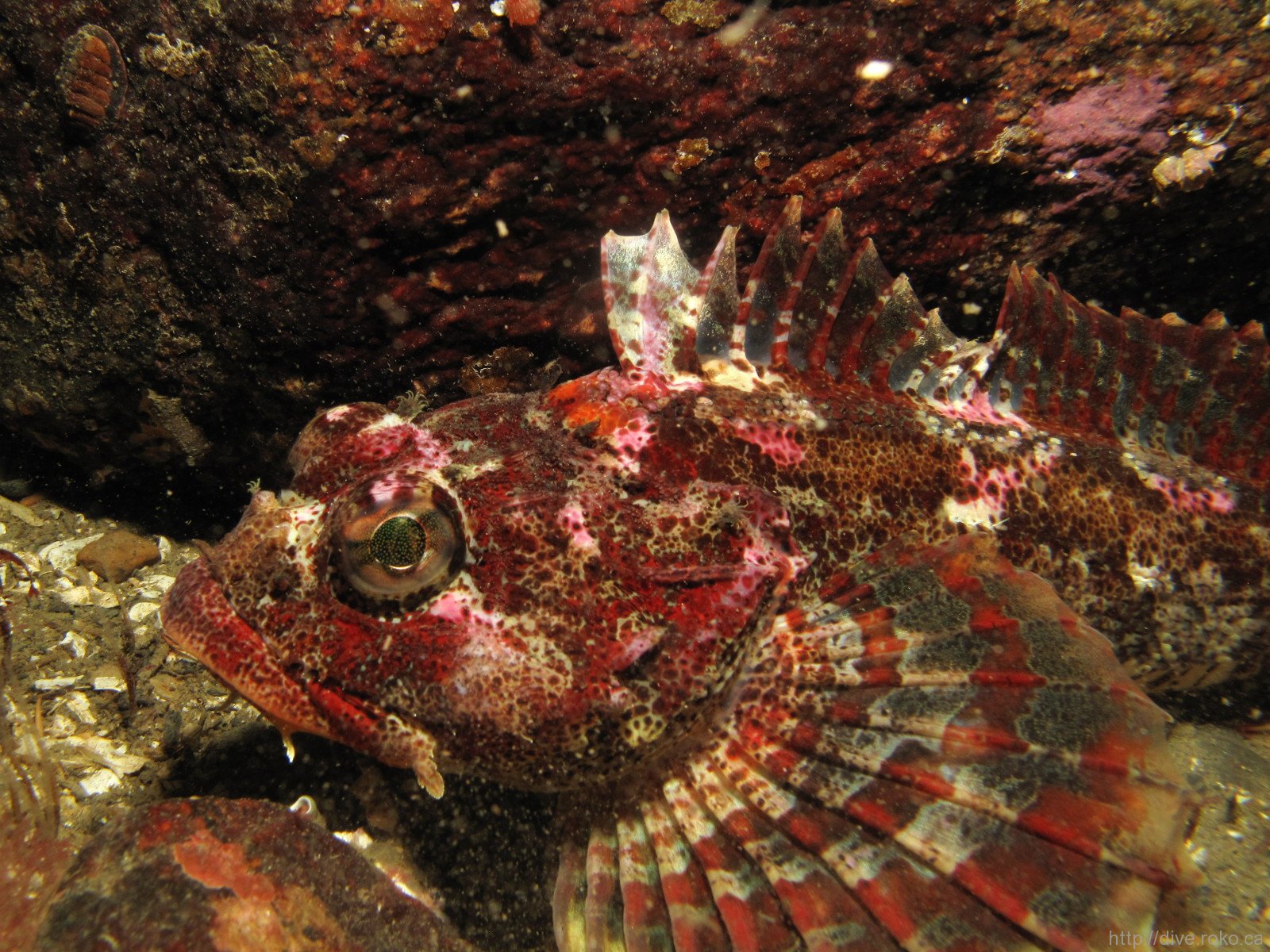
A Grunt Sculpin. Usually these guys live in barnacle shells, but this guy was hiding under the wreck.
I like the focus on this shot.
Britannia Beach is currently one of my favorite dive sites, as the wrecks harbour an amazing amount of life in a concentration that I haven’t seen elsewhere locally yet. (Although I suspect Porteau should be similar now that I’m getting better at spotting critters.)
With all the nooks and crannies, the site is home to various types of crabs, including several types of decorators, squat lobsters, varius sculpins, shrimp and much much more. The best part is that the dive is relatively shallow, so I can manage long dives on a single tank. The first dive we stayed down for 60 minutes, the second was somewhat shorter.
I took the opportunity on this dive to experiment with aperture settings on my camera primarily to get different focus effects, but some other results came out of this, notably green backgrounds. Even with the small range of apertures available on my Powershot G10, going from small to large meant the difference of black backgrounds to green backgrounds, and a large change in depth-of-field.
Several treats for me popped up on this dive. First, I found a squat lobster which posed nicely for me. Next, while searching under the hull of the Ready, a colourful rock moved and caught my eye. Upon closer inspection, it was a Grunt Sculpin, the first I’ve seen. Unfortunatley it was a couple of feet away under the hull, so I had to put my single strobe out to the side to try and fit the camera under the hull and avoid back-scatter from the silty water. I managed to get some good shots as he hopped around the bottom. Afterwards, Paul found a Buffalo Sculpin which posed very nicely as I took many a photo, adjusting camera settings each time.
There were also several Lincod faithfully guarding egg masses around the wreck. I gave them all a wide-berth to not agitate them and give them reason to chase me away….
I also came across a couple of male Tanner Crabs fighting over a female Tanner Crab for mating rights. I took a video of the end of the fight: (The video is a bit green from the water, I didn’t set up the white-balance before taking the video, since I was in still-photography mode..)
This was one of my best dive days in a long time. I really enjoy the diversity of life at this site, and seeing new and cool animals is always a highlight of a dive!
I hoped on for a couple of dives at Whytecliff, the first dive to the usual Plumose Gardens, the second dive we hopped in on the far side of Whyte Islet and swam around back into the bay. Since there was a rather large interchange going in from low to high, part of the dive was a great drift dive with some great current pushing is around and back towards the bay (usually).
The weather itself cooperated very nicely, with the sun popping out to warm us up during our surface interval. This proved far nicer than the cold, rainy, windy surface intervals of the winter. Looks like summer is on it’s way at long last.
This shot turned out well. Usually the small fish don't pose nicely.
I managed a couple of decent photos on this trip, including a couple of snaps of a Rhinoceros crab. It’s funny how you can go so many dives without seeing a specific type of animal, but once you see it and know what to look for, you see them everywhere. There was even a hairy spined crab, but it scurried away into a crevice before I could set up a good shot…
The second dive around the Islet proved to be interesting, with the currents of a very low tide starting to come back in. First it was pushing us around the Islet towards the bay, then it seemed like we were fighting it to get back in towards the bay (although not quite as strong that time). It was a fun dive, though. It probably would have been more of a struggle if we didn’t time it roughly with the tides given the day’s interchange.
After having dove Kelvin Grove for the first time in the fall when I was between camera cases, I’ve wanted to return with my camera to try and snap some photos. I was glad to hear one of my usual dive buddies wanted to dive there this weekend.
Unfortunately, the visibility wasn’t great. I’m assuming the spring run-off and/or algae bloom is starting, which will mean reduced visibility for the while. In the first 60 or so feet, the visibility was often worse than 10-15 feet, but opened up to 20-25 feet of visibility at around 80-90 feet deep — Luckily my camera does well for small, close-up subjects so poor visibility isn’t too much of an issue!
A Cockerell's Nudibranch? Or.....
Lots of interesting subjects around, so I managed to get some decent photos. Several unique nudibranchs were out and about, including some I haven’t seen before like a large Orange-Peel Nudibranch that Paul found. Also another one of interest is what I beleive to be a Cockerell’s Nudibranch (Although something inside of me still believes it may be another kind of invertebrate).
Not all the subjects were cooperative, as several sculpins and a gunnel decided they didn’t want to wait around as I tried to maneuver around them to compose a nice shot. Having drastically improved some of my fine propulsion skills (i.e. Back-kick) in Fundies did help, however ultimately something about a large creature blowing massive bubbles was enough to scare the timid fish away.
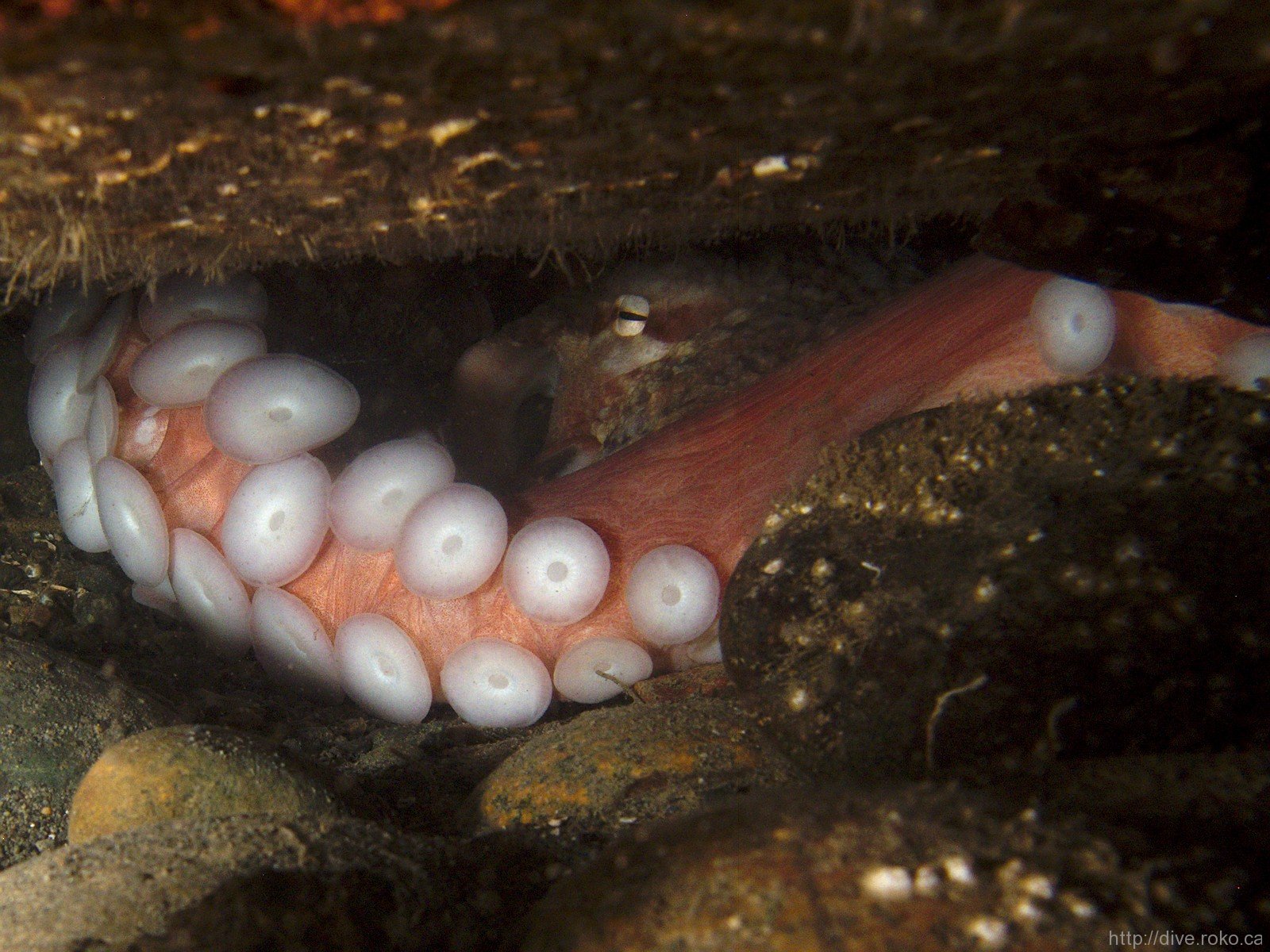
On the topic of uncooperative subjects, there was even an octopus hiding deep inside of a crack, taunting me with a tentacle which he pulled away before I could get set up for the shot…
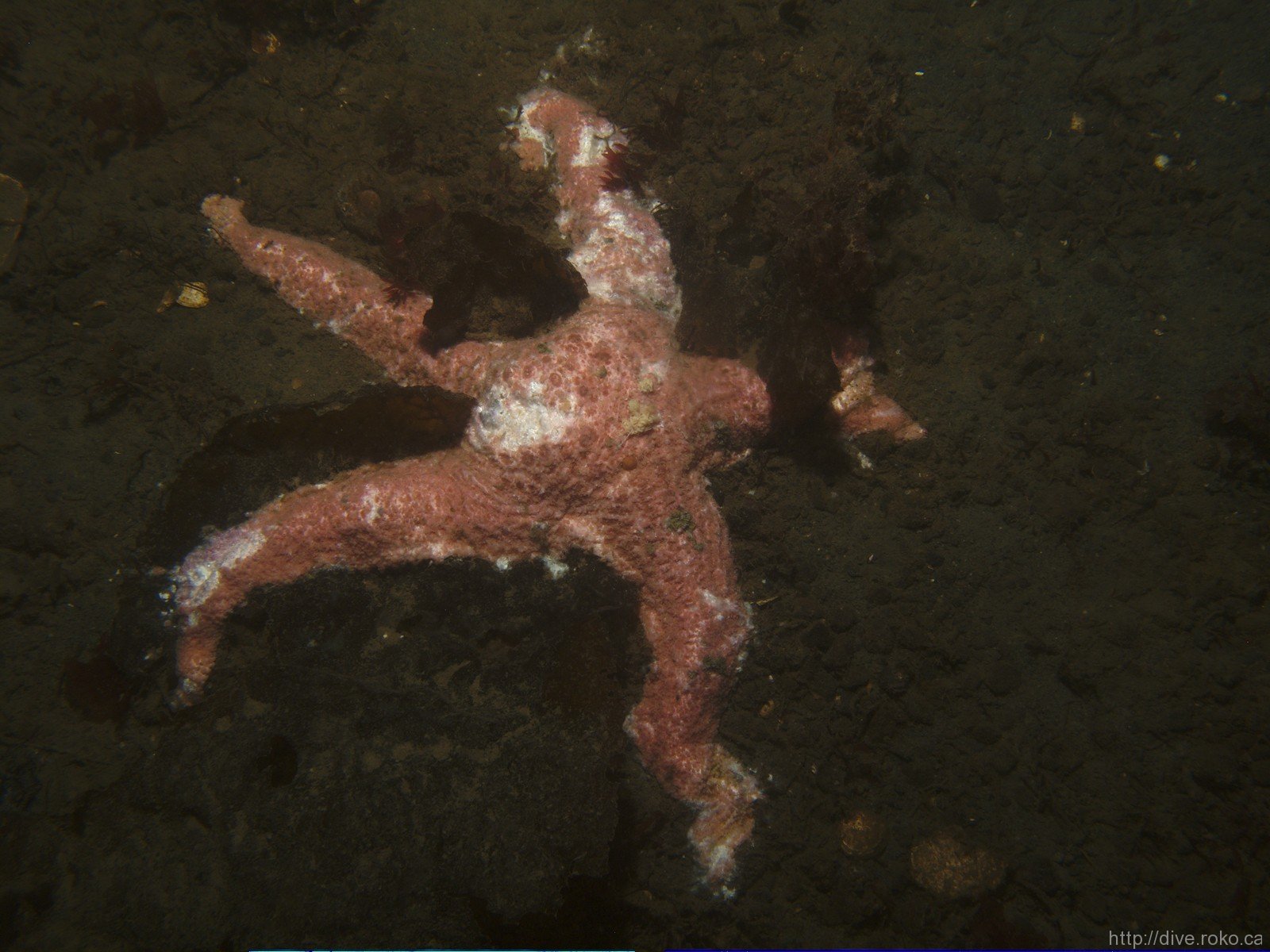
A very slow struggle of life and death, this anemone appears to be eating the starfish.
I played around with Darktable some more to process these images, and I identified a number of mistakes I made in the first batch of photos I processed which left them looking “dull” for lack of a better term. Improving upon that in these photos, I’m very pleased with the results. I even managed to rescue some poorly exposed photos, including the photo of the Rockfish in the sponge. (After my first shot, he moved before I could increase my strobe’s intensity for another shot). Overall I’m impressed with the capabilities in Darktable, and the best part was the price-point (Free!). I’m still learning the finer points of post-processing so I’m expecting the “Style” of my photos to waver a bit over the next little while, but hopefully I’ll get it dialed in nicely in the end.
Of course, the ultimate goal is to take photos well enough in the first place that I don’t need much post-processing, but I’m not quite at that skill level yet. I guess I’ll have to do some more diving and keep taking more photos. I think I can handle that…
Admittedly, this article wasn’t published anywhere near March 3rd, the date the photos were taken. But, in keeping with the the tradition, I’m forcing the post dates to the dates of the photos, making it easier for viewers to correlate conditions and what can be seen by date.
Anyways, I’ve been doing a lot of diving without a camera this month (Taking GUE Fundamentals), and I haven’t had a chance to get these photos processed until recently. On that note, I’ve been playing around with a program known as “Darktable” for processing RAW photos. Darktable is an open source (read: Free) alternative to Lightroom. I’m still learning the ropes of the new software, but I like what I see so far. The images in this post were all processed in Darkroom, however I must admit they weren’t the best exposed photos I’ve taken, which is perhaps why I’ve taken so long to edit them and upload them. I couldn’t seem to make them look decent in UFRaw and GIMP, however Darktable made it easier. Or perhaps I’m just more motivated towards the end of the month.
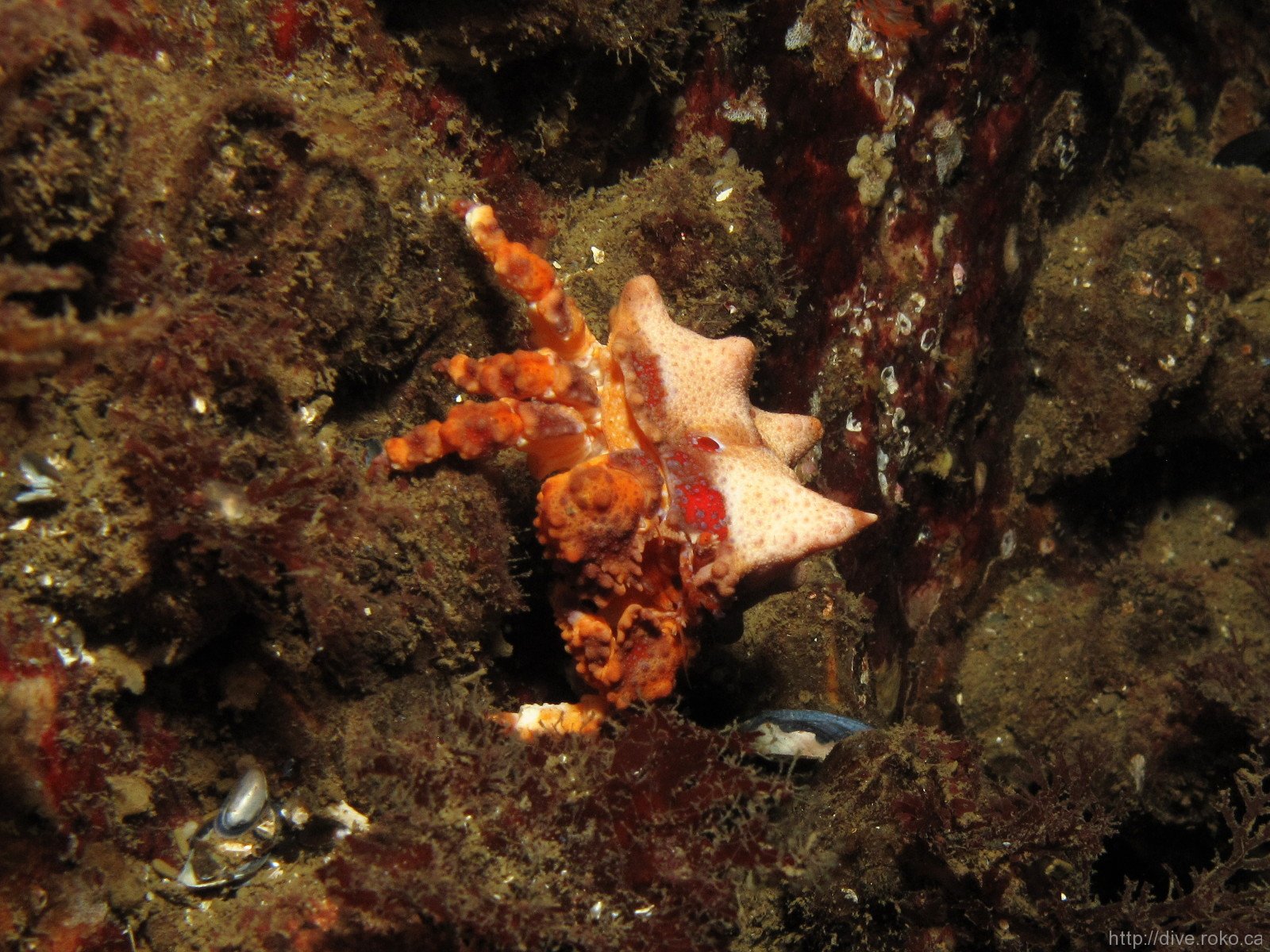
A Hairy Spined Crab
On to the actual dives!
I went out to Whytecliff for a couple of dive swith a new buddy with whom I would be taking GUE Fundamentals in the coming weeks. Although I haven’t always had much luck of getting great shots of cool critters at Whytecliff, I was pleasantly surprised on this dive with a wide variety of crabs. Some of the cooler crabs which I’d never seen before were the Rhinoceros Crab and the Hairy Spined Crab, both very unique and funky crabs. Unfortunatley I couldn’t seem to expose them quite right, so the photos aren’t as good as they could be. Also of note was the large number of HUGE Tanner Crabs, which appeared to be mating.
A new site was recently discovered by the Shipwreck Exploration and Conservation Society, containing several wrecks which have sunk over the past few years. Some friends had dove it the previous week, and located lots of interesting things. Finally being free and not having to work on a weekend, I joined them this past weekend to explore the sites.
As a quick note to any divers who may be heading out to these wrecks, they have many fragile parts and there are several Lingcod egg masses in the area. Please be careful to not damage these wrecks, or disturb the endangered life in an area slowly recovering from the damage done over the years by the mine run-off. Good buoyancy and and propulsion skills are a must, as these will quickly disintegrate from too many unskilled divers abusing this site.
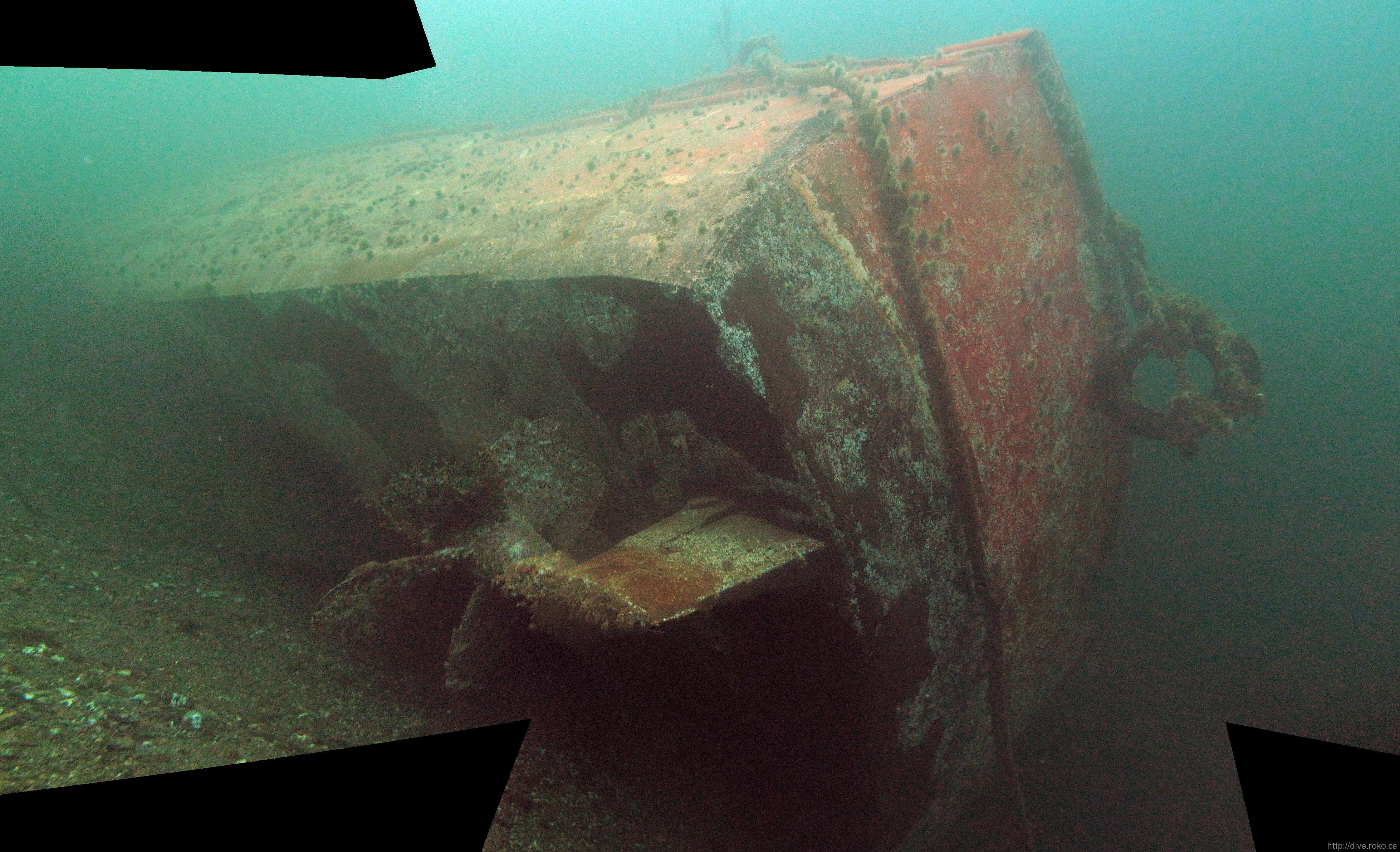
Looking along the bow of the coastguard cutter wreck
Initially we dove a site away from the two main wrecks, and explored some smaller sunken boats and a bunch of “junk”. In the top 30 or so feet near our exit point, there was a rock bed which held a nice amount of life, providing opportunities for some nice macro photography.
It was really interesting diving the two wrecks, however without a wide angle lens, and a camera that doesn’t handle poor light that well, taking photos of the wreck was difficult. I managed to get some good shots after playing around with settings however. Fiddling around with the white balancing of the RAW photos in UFRaw yielded some interesting results, but ultimately I think black and white provided the best results for the wreck photos. I was left wishing I had a wide-angle lens, and a camera with better low light sensitivity…
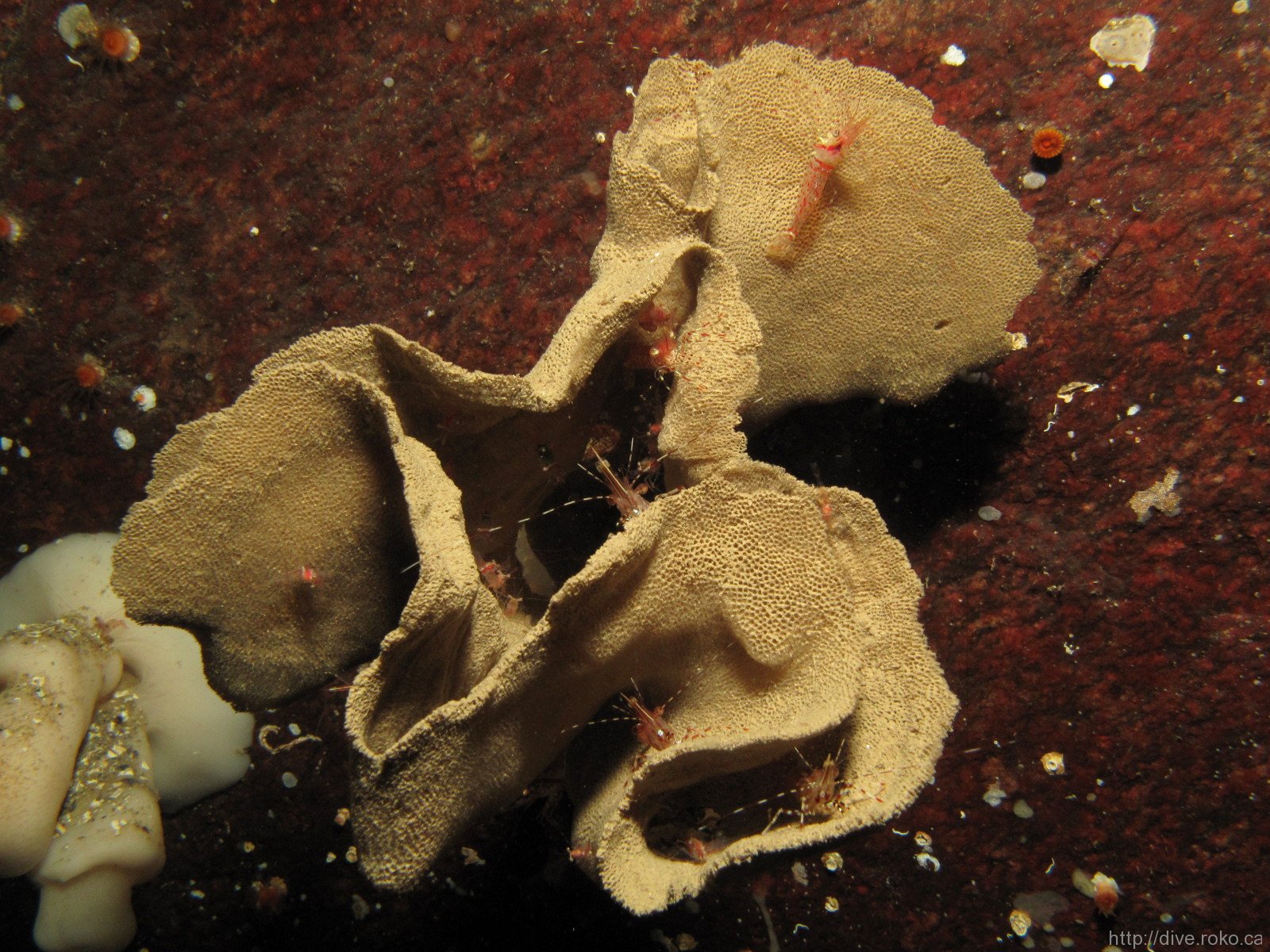
A neat shrimp, just over 1 inch in length. I must have taken 30 photos with various settings to get it just right...
Swimming up and down the two wrecks provided for some interesting macro opportunities as well, as life is taking hold on them. From some larger nudibranchs, various fish, and tonnes of shrimp. These made me wish I had a macro lens! I think I might opt for some macro wet lenses for my case in the next little while…
Once again, I urge the utmost caution with this site. It’s very fragile, and will deteriorate very quickly if we as a dive community do not take care of it.
The following are some tutorials I’ve found useful in learning the unique skills of underwater photography. Many of the tutorials are geared towards compact cameras as opposed to DSLR, some are more generic and cover both DSLR and compact cameras. I’ll add links to this list as I find new resources.
Guide to Underwater Photography – Perhaps one of the best resources I’ve found. This site covers topics ranging from getting started to advanced techniques, compact cameras to DSLRs, and more. There is also a good discussion on strobes and strobe positioning. A very highly recommended read.
Canon G11/G12 and S90/S95 Underwater Photography – A useful link for Canon Camera compact cameras. Although it is geared towards the Powershot G11, the G10, G12, S90, S95, etc are very similar cameras and the discussion is applicable to those cameras as well.
After a crazy week of Vancouver snow and freezing rain, I skipped on over to Whytecliff park for a couple of dives. Luckily it had warmed up to above zero, and the snow had been washed away by all the rain. Unfortunately, the rain appeared to have washed the snow straight into the ocean, causing some pretty bad viz (10-20 feet.. Bad for winter, good for summer!) and cold temperatures on the dive.
At Whytecliff itself, there were some swells making entry and surface swimming a lot more fun. The tide was high, so we didn’t have to scramble over too many big rocks to get in. Instead of surface swimming around towards the day marker, we elected to descend early and go through the bay underwater to avoid some of the swell.
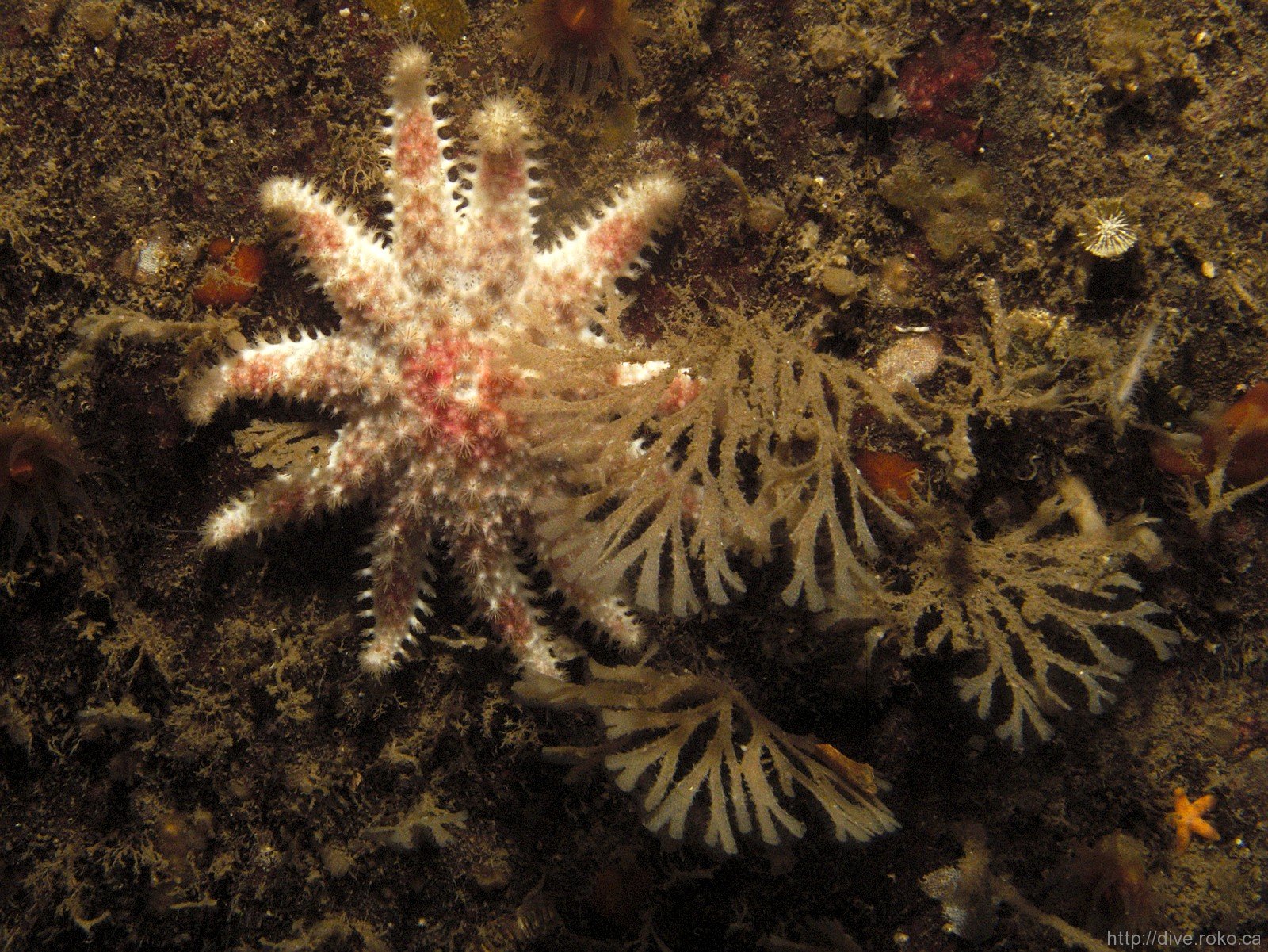
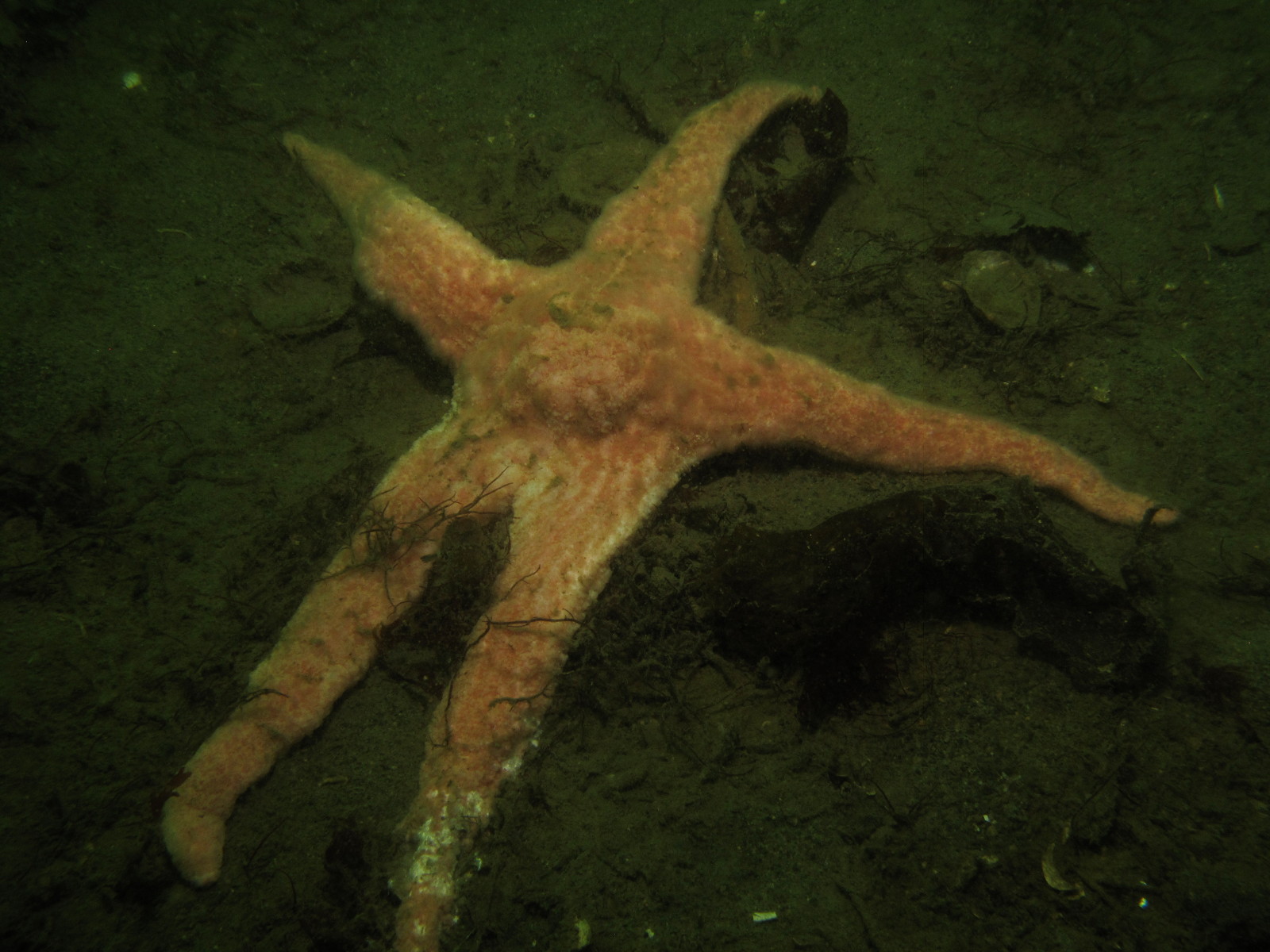
If you've ever wondered what the tube-feet on one of a Sunstar's many arms look like, this is it.
Underwater I didn’t feel it was my best photography day, as I didn’t find too many critters posing nicely (though I found quite a few who flat out refused to co-operate). I spent a large portion of the dives fiddling with my buoyancy and trying to stay still in the frigid waters. (The coldest my computer read was 43 F, but it has an averaging algorithm that I think misses some of the more brutal thermoclines).
At some points on the northern part of the bay, you could see where the fresh water runoff was mixing with the salt water. Always a trippy effect that makes it hard to see, as everything turns blurry.
Even though the sun wasn’t out, it was fairly bright at around 20ft, so I attempted to take some shots without the flash in the shallows. It was a bit awkward, as making the shutter speed any less than 1/60s introduced too much motion blur, while pumping the ISO up to 400 introduced too much noise in the camera. Fiddling with the RAW files made things look more interesting. Unfortunately, the poor vis made it hard to take any decent shots. It did make me wish I had a wide angle lens for this camera, however…..
After scraping the ice and snow off of my Jeep this morning, I made my way down to Porteau Cove with one of my dive buddies. It was a nice day hovering around zero, with a light dusting of ice and snow on the ground. Perfect for drysuit diving in cold water!
I’m pretty sure my computer measured the water at the surface at about 39 degrees F, but thankfully at depth it warmed up to about 44 degrees F. We managed two good dives, about an hour long each. My new Santi hood managed to keep me much warmer than my old hood did, so I didn’t get too chilled. For the second dive I did have to throw on an extra 4 lbs of weight so that I could inflate my drysuit some more…
I managed to get some nice pictures on this dive that I’m happy with. Without further addoo, here are the photos: